Strategy, Organization & Innovation
Assistant Professor of Strategy
Mitchell E. Daniels, Jr. School of Business
Purdue University
Editorial Board — Strategic Management Journal
Editorial Board — Organization Science
Research Program
Strategy scholarship has long assumed that firms can fluidly adjust their boundaries and innovation strategies as markets shift. My research challenges that premise. I investigate the structural, environmental, and historical frictions that govern how firms actually adapt — or fail to.
By combining large-sample econometrics, network analysis, and computational modeling, I open the black box of the firm to show how organizational structure shapes the fundamental boundaries of innovation. What emerges is a counterintuitive finding: the structural choices that optimize a firm for long-run survival are precisely those that prevent it from adapting when it matters most.
Stream A
How do external environments and formal organizational design dictate what a firm can invent, acquire, and appropriate?
Stream B
How do early shocks and knowledge complexity permanently lock firms into strategic trajectories — and what does that cost them?
Unifying Argument
Structure does not merely constrain adaptation. It produces and reproduces the conditions that make certain futures possible and others unreachable.
The traditional vocabulary of strategy — inertia, centralization, imprinting — treats organizational structure as backdrop. This research program treats it as mechanism. Across inventor networks, learning dynamics, founding shocks, and acquisition trajectories, a consistent logic surfaces: the same internal architectures that accelerate learning and appropriate value in the short run systematically narrow the adaptive range of the firm over time. The tradeoff between organizational fitness and strategic flexibility is not a market outcome. It is emergent within the firm and across its environment, through the very processes that impact survival and performance.
Peer-Reviewed Publications
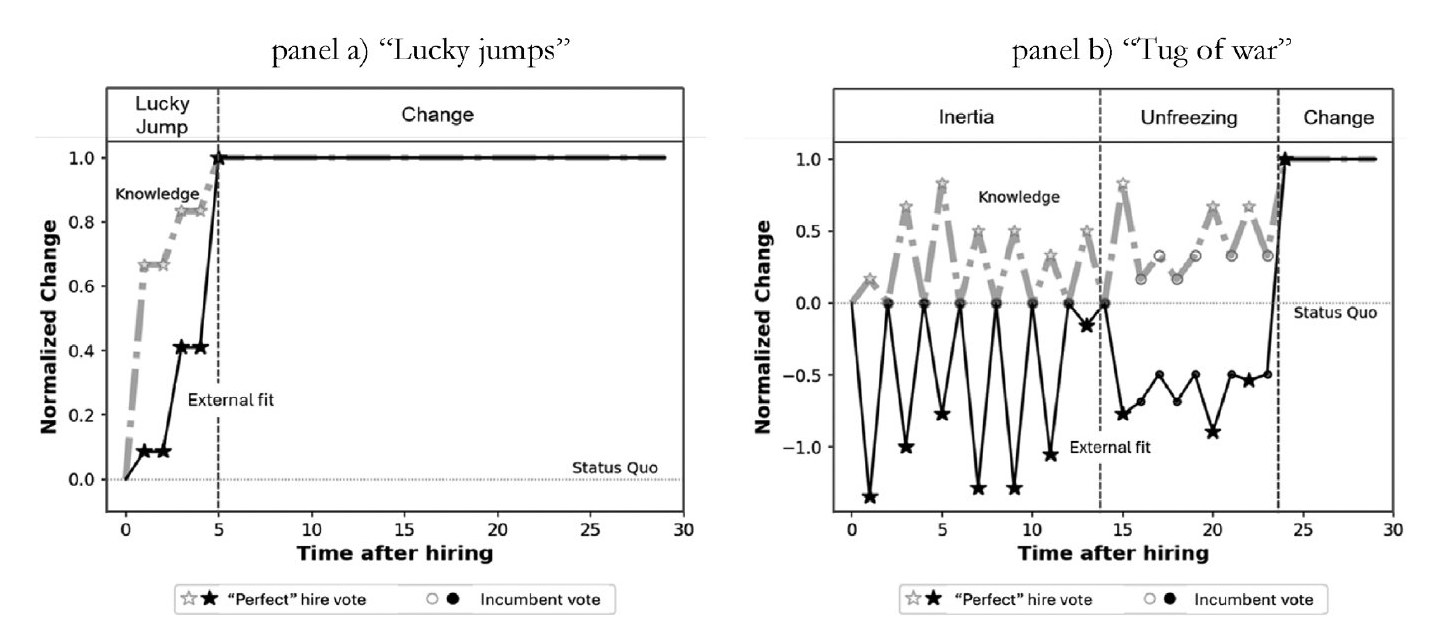
Computational modeling reveals a counterintuitive mechanism of inertia: firms with high internal fit face greater difficulty absorbing external knowledge due to a persistent structural resistance between incumbent employees and new hires — independent of cognitive or social constraints.
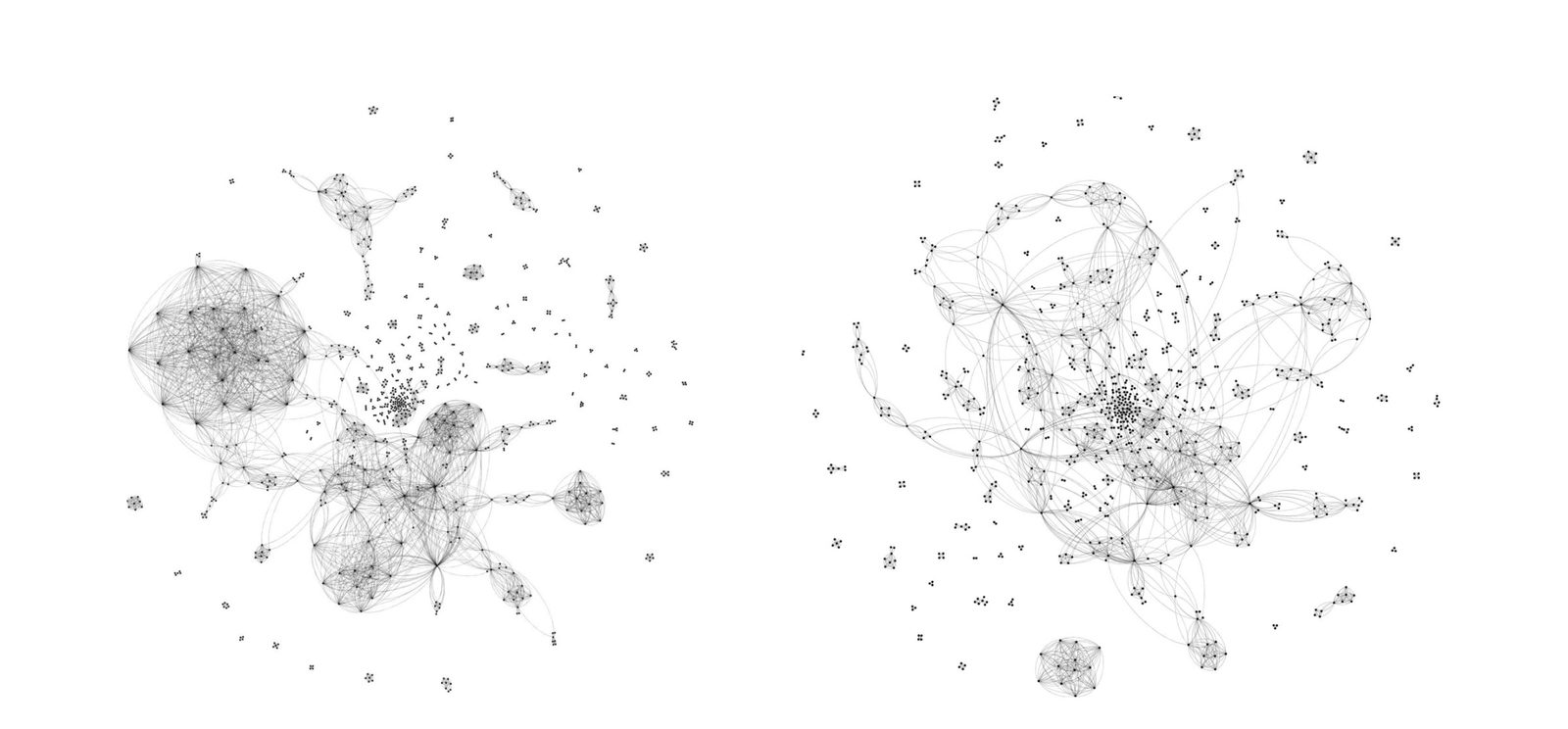
Specific network topologies — near-decomposability and integration — govern the speed at which firms build on their own knowledge. Evidence from patent data across 1,417 large corporations over 26 years. Acceleration effects are strongest in the critical years immediately following an initial invention.
A firm's acquisitiveness is not a fluid rational choice. Using 1,201 IPO firms observed over 20 years, this paper establishes that favorable conditions during the plastic window of a firm's founding permanently lock it into acquisitive trajectories — with persistence that no subsequent market shift can reverse.
Formal R&D authority changes propagate through informal inventor networks over a multi-year lag. Centralization increases inventor connectedness, which in turn broadens innovation impact and technological search — revealing organizational structure as an active lever on research behavior.
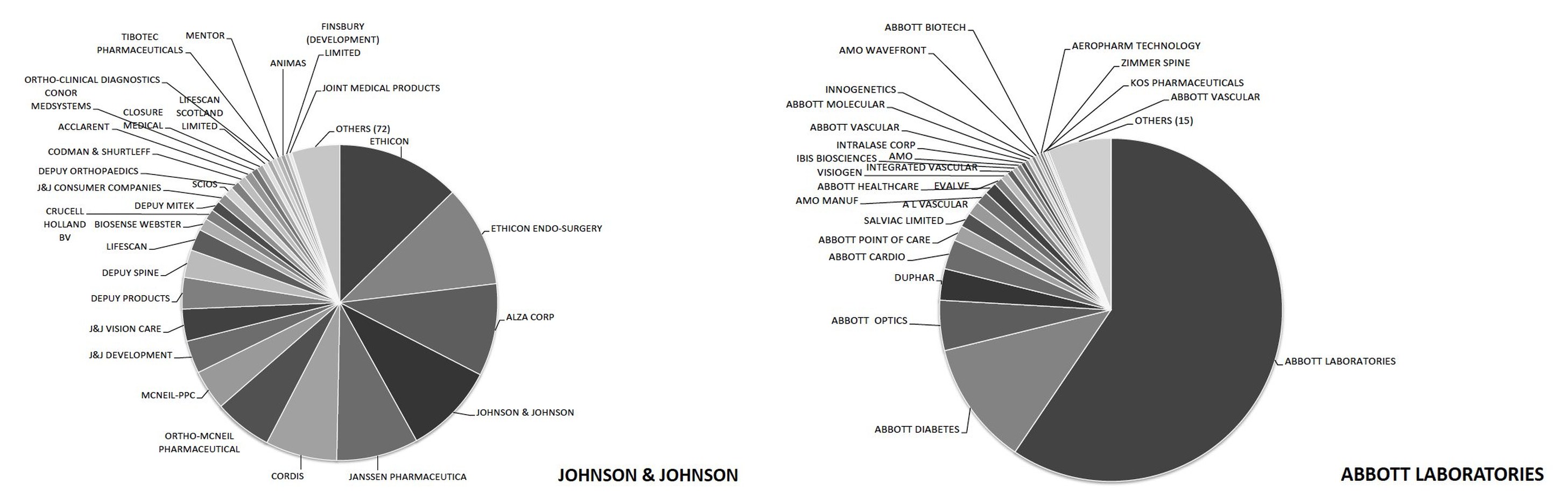
Develops a patent-assignment-based measure of R&D decentralization to demonstrate that organizational structure dictates the mode of innovation: centralized firms extract value from internal R&D; decentralized firms rely on external knowledge. Structure and innovation strategy must be studied together.
Using firm-level data across 15 countries, demonstrates that underdeveloped external capital markets drive corporate group formation — establishing the macro-environmental origins of firm boundary decisions before strategy scholars have a chance to observe them.
Under Review
Natural disaster exposure during a venture's formative period imprints it with structural fluidity — enabling precise IPO market timing, but at the cost of significantly elevated long-term mortality risk. The same reconfiguration capacity that creates early advantage becomes a survival liability at scale.
Group-based trajectory modeling across thousands of firms uncovers a fundamental macro-tradeoff: firms locked into persistent transactional reconfiguration patterns achieve the highest survival rates while suffering the steepest market valuation penalties. Survival and value creation pull in opposite directions.
Peripheral inventor networks function as the firm's vital experimental space. "Temporal brokers" — inventors who move across network boundaries over time — are the critical transport mechanism for injecting exploratory novelty into the core, resolving the core-periphery innovation paradox.
Computational modeling demonstrates that remote work improves outcomes in simple, stable environments but degrades organizational learning severely in complex, turbulent ones — requiring fundamental structural reorganization to mitigate, not surface-level policy adjustment.
Academic Positions
Education
Editorial Service
Selected Awards & Grants